Indian Residential Schools National Monument (IRSNM)
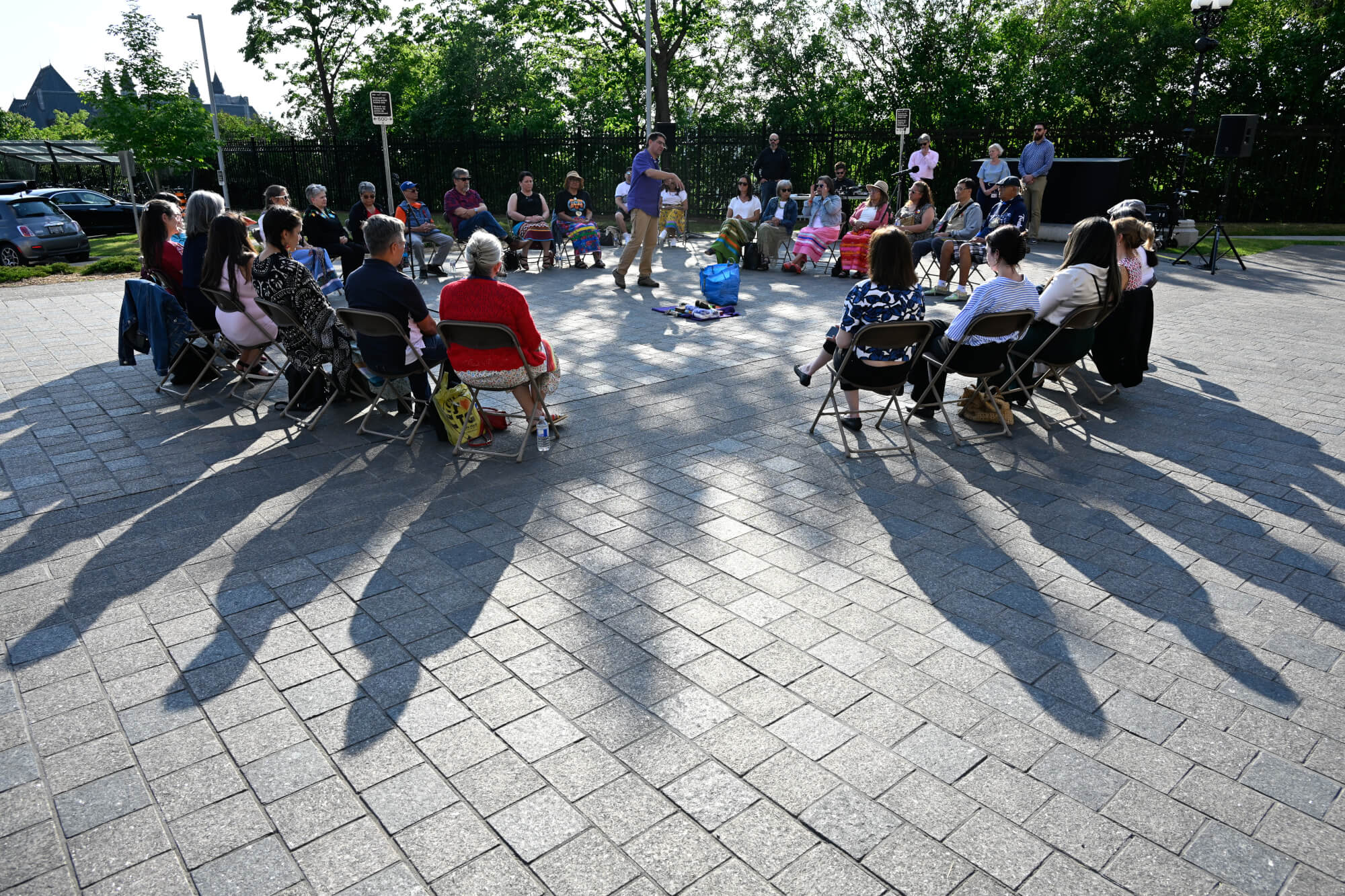
The Indian Residential Schools National Monument (First Nations, Métis and Inuit) responds directly to the Truth and Reconciliation Commission of Canada’s Call to Action 81, which called for the creation of a highly visible national monument in Ottawa, on the ancestral lands of the Algonquin Nation, to honour Survivors of the residential school system and commemorate the children who never returned home.
Guided by a Survivor-led Steering Committee, the Monument is envisioned as both a contemplative space and a sacred gathering place. Located on the traditional and unceded territory of the Algonquin Anishinabeg Nation on Parliament Hill, it is intended to support ceremony, healing, education, and reflection. The Monument will stand as a public acknowledgement of the profound harms caused by the residential school system and will shed light on the truths of Canada’s historical and ongoing relationship with First Nations, Métis and the Inuit.
For the most current information on the Indian Residential Schools National Monument (First Nations, Métis and Inuit), please visit the Government of Canada’s official webpage.
National Centre for Truth and Reconciliation (NCTR) Role and Partnership
The National Centre for Truth and Reconciliation has been engaged by Canadian Heritage (PCH) to provide secretariat support to the Survivor-led Steering Committee. In this role, the NCTR helps coordinate committee activities, supports engagement processes, and ensures that Survivors’ voices and historical truths remain central to the Monument’s development. Through this partnership, the NCTR contributes to advancing the spirit and intent of Call to Action 81 and supports the Monument’s purpose as a lasting site of memory, learning, and accountability.
Browse current and past issues of our quarterly newsletter
Sign Up for Our Newsletter
Stay informed about NCTR news, events and initiatives.
NCTR’s spirit name – bezhig miigwan, meaning “one feather”.
Bezhig miigwan calls upon us to see each Survivor coming to the NCTR as a single eagle feather and to show those Survivors the same respect and attention an eagle feather deserves. It also teaches we are all in this together — we are all one, connected, and it is vital to work together to achieve reconciliation.